-
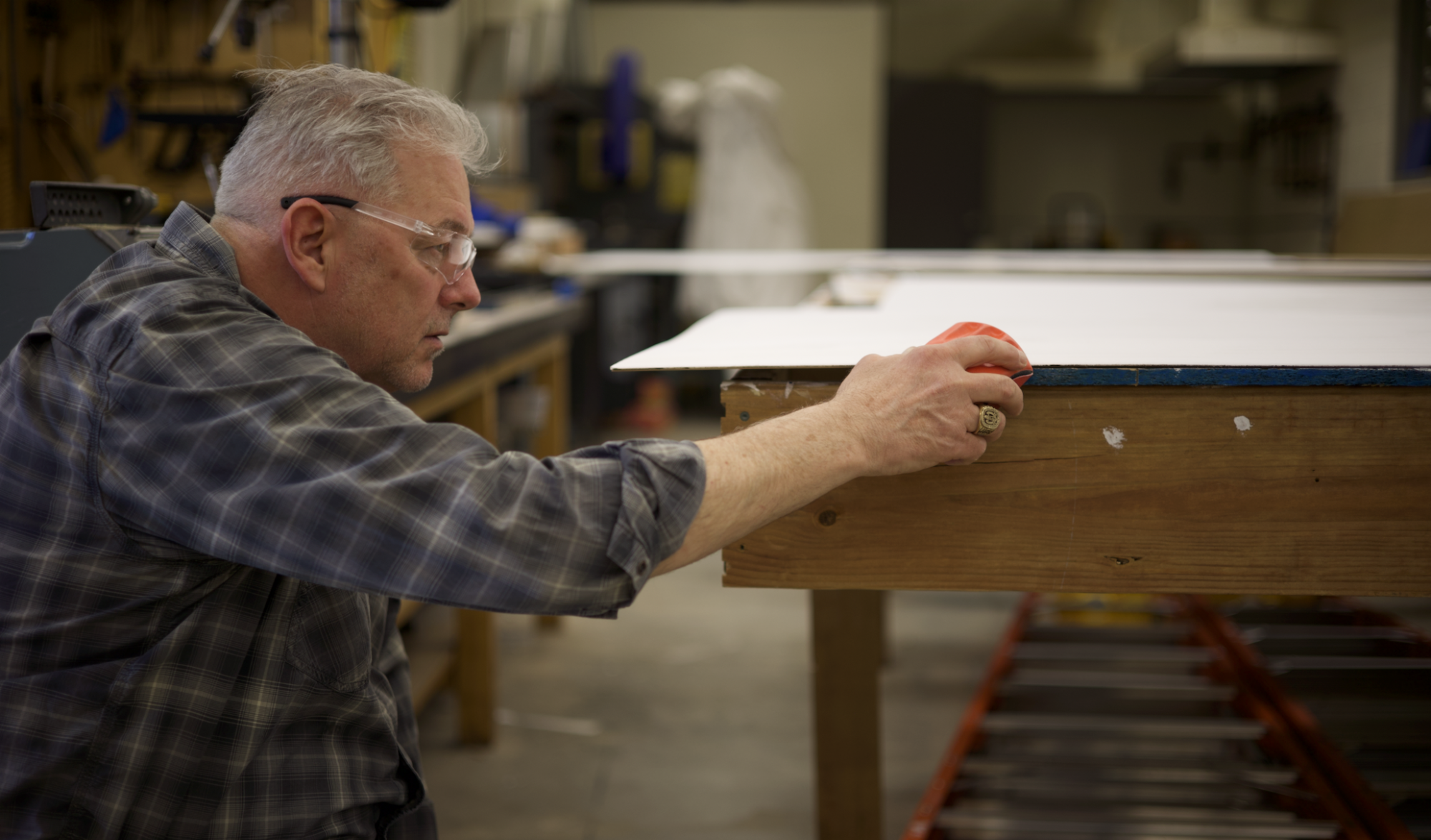
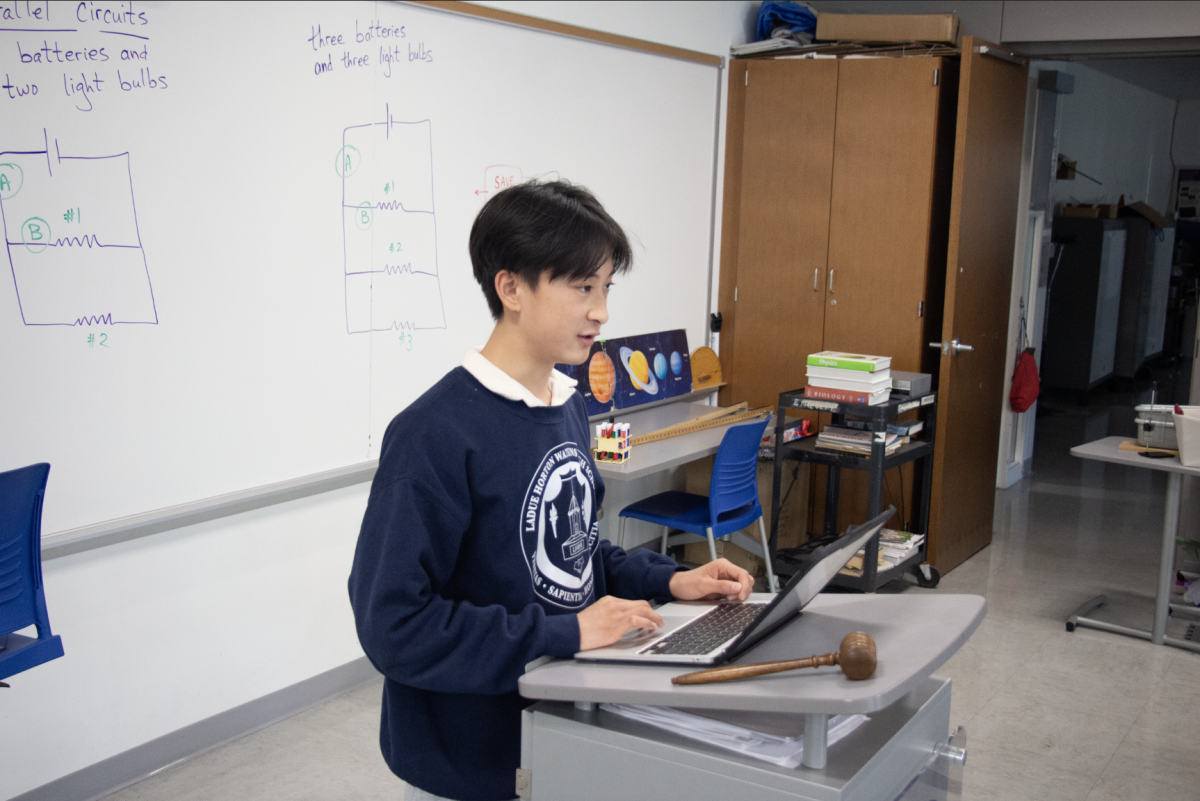
William Edwards works in his woodworking and construction innovation classes. He has been teaching these courses at Ladue for three years after substitute teaching in schools around St. Louis, and brings a unique sense of project-based teaching to the classroom. “I feel very strongly about this type of thinking and learning,” Edwards said. “It teaches us to be teachers and team builders. Working in groups allows us to understand each other and realize the power in team work. Everyone brings something to the group, and the combination of these skills become the glue and synergy that makes the group succeed.”
-
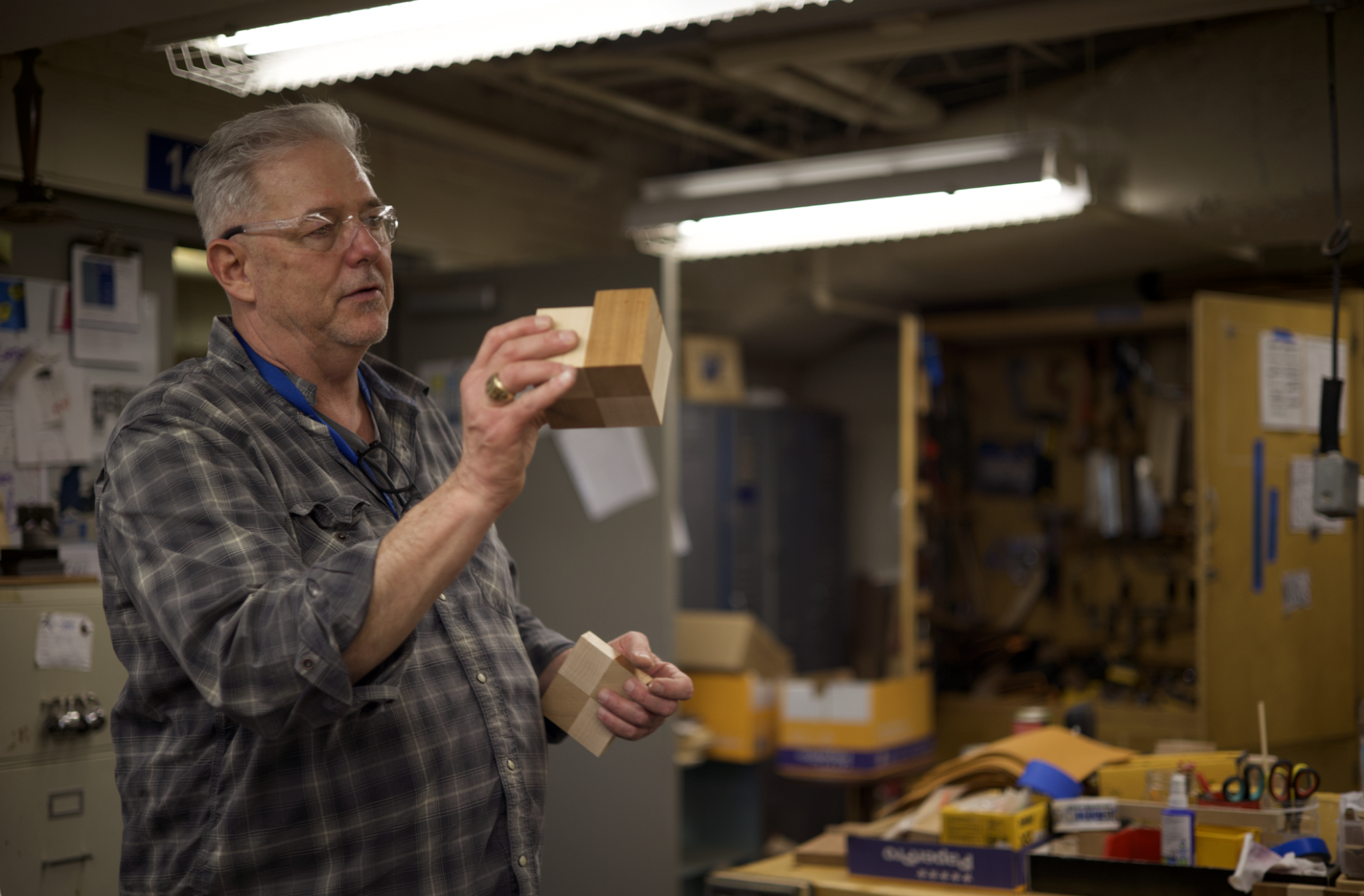
William Edwards works in his woodworking and construction innovation classes. He has been teaching these courses at Ladue for three years after substitute teaching in schools around St. Louis, and brings a unique sense of project-based teaching to the classroom. “I feel very strongly about this type of thinking and learning,” Edwards said. “It teaches us to be teachers and team builders. Working in groups allows us to understand each other and realize the power in team work. Everyone brings something to the group, and the combination of these skills become the glue and synergy that makes the group succeed.”
-
William Edwards works in his woodworking and construction innovation classes. He has been teaching these courses at Ladue for three years after substitute teaching in schools around St. Louis, and brings a unique sense of project-based teaching to the classroom. “I feel very strongly about this type of thinking and learning,” Edwards said. “It teaches us to be teachers and team builders. Working in groups allows us to understand each other and realize the power in team work. Everyone brings something to the group, and the combination of these skills become the glue and synergy that makes the group succeed.”
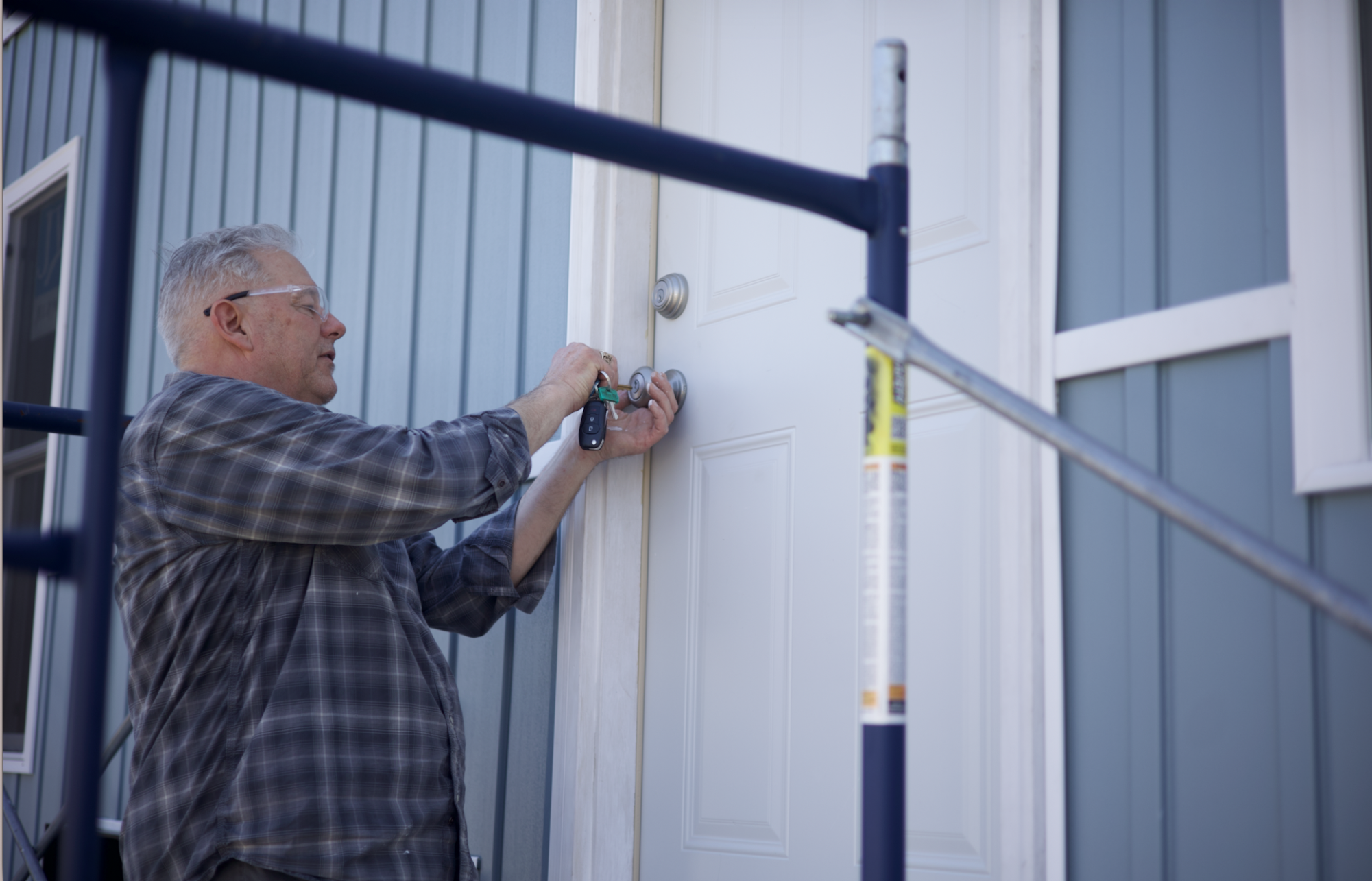
While most children spent their days on playgrounds, William Edwards was raised among steel shrimp trawlers, towering bridges and piling foundations, his days framed by airplanes and helicopters overhead. There, Edwards watched his family turn raw material into marvel: boats that could brave the tides, docks that refused to sink, planes made to weather storms.
Edwards, now a woodworking and construction teacher, has been immersed in the skilled trades since the very beginning. His familial environment shaped him from early on, instilling in him a deep respect for craftsmanship and hard work.
“I grew up in a construction and engineering [oriented] family,” Edwards said. “My father and his three brothers built houses, boats, foundations, docks and more. All of them did well for themselves, and I worked hard for all of them throughout my youth.”
Much of Edwards’s motivation was rooted in the example set by his family and their bold approach to the trades.
“These men and their fearless determination were my inspiration,” Edwards said. “They were masters of construction and the ocean. Anything that had to do with the water they were into, whether it was building barges, scuba diving, managing a commercial fishing operation or navigating terrible storms and coming back alive. They did it all.”
Edwards became further involved in the trades when traveling to Grand Cayman in 2007 to participate in construction projects in the aftermath of Hurricane Ivan, a Category 5 storm that tore through the island’s infrastructure and the environment.
“Ivan stalled over the island for 36 hours and stripped off all the vegetation,” Edwards said. “So, all the new construction had to be hurricane proof. As a civil engineer, reinforced concrete and structural steel was my specialty.”
In addition to hurricane recovery, Edwards worked with the island’s youth. He lived for three years in East End, a small town and one of the five districts of the Cayman Islands.
“East End was a little fishing village,” Edwards said. “Kids there did not have vocational classes in high school. They were not taught any trades there. They had the option of going into tourism or getting involved in smuggling. The thought of a 15-year-old driving a 30-foot Jamaican canoe over 270 miles of open sea to make a run just seemed so impossible to understand or accept, but these kids were doing it.”
Edwards’s heartfelt concern for the children on Grand Cayman was soon replaced by action, and he was met with the opportunity to help rebuild their lives.
“I felt great training these tough kids and giving them a way to provide for their new families,” Edwards said. “They now had options and could work and make an honest wage. Soon, the East End began to prosper and crime rates were lowering. People were happy and were able to buy basic stuff, nothing extravagant. Things were good for a while.”
Working abroad not only gave Edwards the opportunity to support the community, but reinforced the importance of learning from those of differing cultures and backgrounds. By working alongside people who approached problems in distinctive ways, he gained a deeper appreciation for diversity.
“I eventually grew into working in construction groups where I was the only English speaking person,” Edwards said. “So, I learned how to build high rise buildings with people [who were] speaking five or six different languages around me, and the things I learned from them [showed] me better ways to build here. It became a really cool experience because not only are our cultures different, but the way we solve problems are different. That’s what the world needs.”
Beyond his field experience, Edwards’s journey in education began with his role as a substitute teacher after obtaining his engineering degree from the Georgia Institute of Technology, laying the solid foundation for what had been blooming from the start — a lifelong passion for teaching.
“I subbed for four years while getting my masters in education at Lindenwood University,” Edwards said. “I fell in love with teaching while subbing, realizing I’d been doing it all along while training employees during my construction career. Everyone in my family had a hunger for learning, even my dear grandmother up until her final days. She would always talk about new ways to do things and things she had learned during our long talks.”
His past experiences motivated him to guide the next generation of learners along their own pathways to success.
“I wanted to help kids find ways to achieve their dreams and make them realize it was possible if they were willing to work hard,” Edwards said. “I faced so many tough times in my life and paid for my own education post high school. I wanted all kids to understand that they could find their dreams and achieve them. I wanted to give them hope.”
Edwards’s personal perspective on hard work and opportunity are defined by the hardship, challenges and opportunity he faced during his own education.
“I was half way through college and ran out of money,” Edwards said. “I took up two jobs, then went into the trades and saved up enough money to finish my Civil Engineering Degree at Georgia Tech, where I worked with one of the leading superintendents in Atlanta. He exemplified teamwork and promoted people who wanted to work hard and make something of themselves. He knew how to build a company.”
Not only was this an insightful part of Edwards’s educational journey, but also a meaningful story for his students.
“I always tell my students about this experience,” Edwards said. “You don’t come across opportunities like this often in life and I learned so much from [my mentor’s] company and management style.”
These collective experiences translate into Edwards’s environment at Ladue. In his classroom, Edwards values student collaboration and personal growth, shaped by his familial threads and influence.
“You have to be able to multitask a lot of different things, and that’s what my uncle is good at,” Edwards said. “That’s what kids today need to learn how to do, and that’s the way we work in [my] class. [We learn] how to help each other, grow socially and emotionally and learn how to solve problems together.”
In his classroom, Edwards places an emphasis on every student’s education, and prioritizes an environment where each individual strength, interest and learning style is valued. He takes an adaptive approach that helps students explore their own creativity and apply their knowledge in meaningful ways.
“I do a lot of project based learning,” Edwards said. “This promotes a differentiated environment. Each student has their own learning preferences, the ways that they learn best. Project based learning caters to these needs. Each project has a set of processes that students learn and then teach and reteach to each other. The learning is internalized quicker and now these skills are there for the rest of your life. You own them and you can use them to think critically and solve problems.”
When this type of teaching is combined with highlighting the importance of collaboration, students begin to learn skills that extend beyond the classroom. By working together, sharing ideas and learning from one another, they build communication, problem-solving and cognitive abilities essential for real-world environments.
“I feel very strongly about this type of thinking and learning,” Edwards said. “It teaches us to be teachers and team builders. Working in groups allows us to understand each other and realize the power in team work. Everyone brings something to the group, and the combination of these skills become the glue and synergy that makes the group succeed.”
Through both hands-on projects and open discussions, construction and woodworking students are encouraged to connect with the material and one another in meaningful ways. They express how Edwards’s teaching philosophy fosters an engaging and supportive environment, making learning more personal and interactive.
“As a person, [Edwards] is a thoughtful instructor as well as very kind and conversational,” construction student Brighton Westermayer (10) said. “In class, Mr. Edwards makes an effort to communicate with students and get to know them better. He will have things like puzzles or debates on the board to get the class talking. I enjoy the amount of freedom [he] gives us to build what we want and experiment with new things.”
For Edwards, these combined classroom experiences ultimately encourage and guide students toward confidence in their own futures.
“I want my students to follow their dreams,” Edwards said. “I am a teacher because I want to provide pathways for students to find success in the future. I want them to realize that it doesn’t matter if you go to college, work in the trades or do a combination of both. It’s your path to success and no one can take that away from you. If you are willing to work hard, you can do anything.”
![Linnea Nystrom (10) guides her
crew back to the boathouse
at the end of practice Feb.
24 at Creve Coeur Lake. This
was Nystrom’s first season as
a part of the St. Louis Rowing
Club after moving from New
York City, and prior to that,
living in California. “Theres a lot
of interpreting what [coach-
es] want you to do or say,”
Nystrom said. “You have to
know them really well to know
what they would want you
to do in a specific situation.
Especially on race days when
they’re not going to be there
the whole time. You need to
take charge and emulate what
they would want.”](https://laduetoday.com/wp-content/uploads/2026/03/LINNEA-1200x783.jpg)
![Miriam Gewirtz talks with a colleague while working on her schedule in her office at Old Bonhomme Elementary School. A workday has usually consisted of working with 10 to 14 students. “[A] big thing we work on is sensory motor skills,” Gewirtz said. “What that includes is a child’s ability to self-regulate and remain attentive throughout the day.”](https://laduetoday.com/wp-content/uploads/2026/02/IMG_8252editedresized-1200x800.jpg)