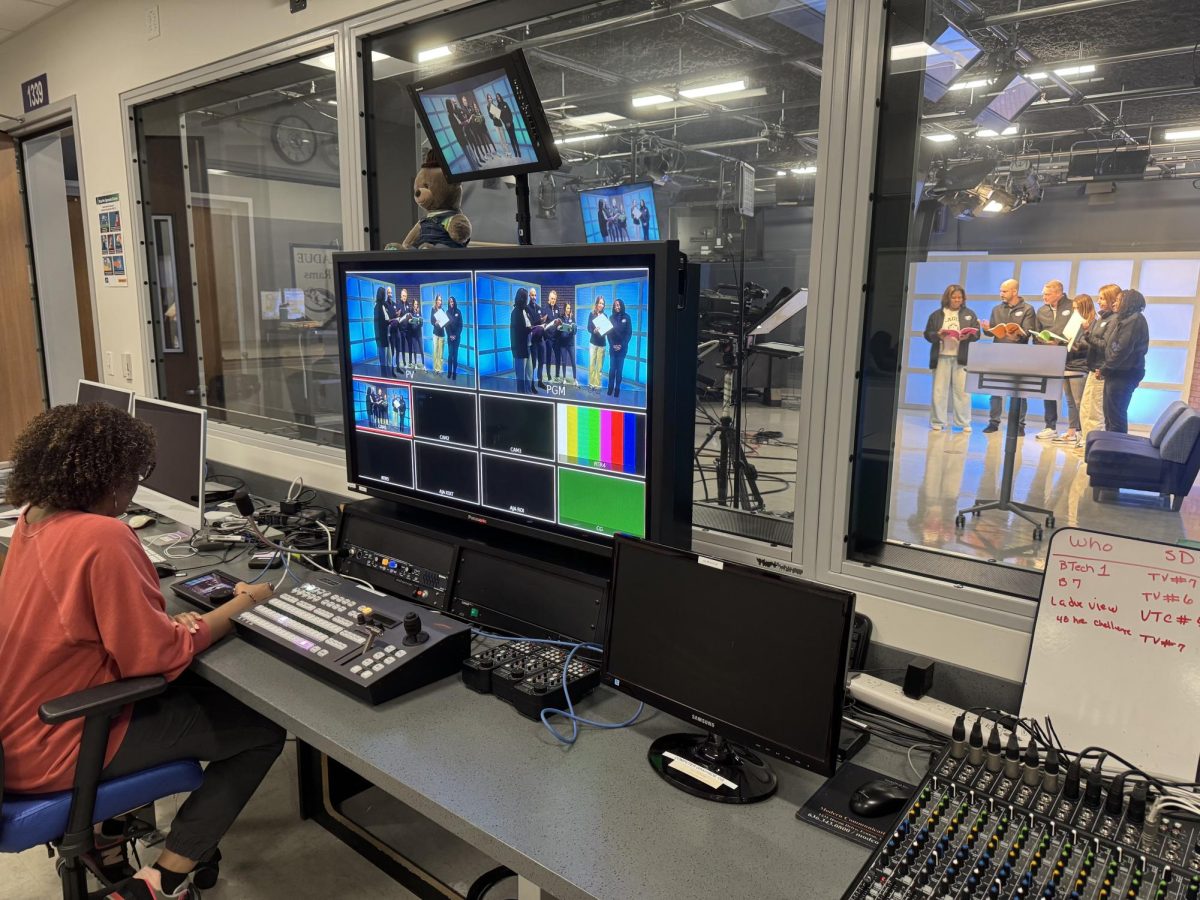
School counselors met in the broadcasting room Oct. 29 to film an informational video for students to be shown during seminar periods. School counselor Shana Bobbitt hopes it would increase an understanding of what the counseling department does for the student body.
“One of our big goals this year is visibility for students,” Bobbitt said. “We recognize that there are some gaps just in terms of them. One, understanding what school counselors do. Two, understanding the differences between our role versus college advisors.”
In the video, the counselors made an effort to include elements like humor in their videos to retain attention and engagement. They also used real-life examples and humor catered towards students to solidify the point.
“We did 10 scenarios,” Bobbitt said. “Two of them were specific to 504s and questions about accommodations and ensuring teachers know what the accommodations are. The rest of them were split between college advisors and school counselors. So if you have a friend problem, if you need to vent, if you have questions about scheduling, if you need ACT prep.”
504s are a federally backed plan for students who have physical or mental disabilities, which can qualify them for extended time or alternate location accommodations when taking a test. This can level off the playing field for a student who has an area of disability versus a student who doesn’t.
“Dr. Ashby’s role is really unique and very specific to a small group of students, but [is] important as 504 coordinator,” Bobbitt said. “So making sure that we find funny ways to convey those differences in a very short time so that we keep attention [was important].”
Her other grade-level counselors Leah Jones, Lauren Fisher and Joe Serot aim to help aid students socially and emotionally all throughout the four years of their high school career. Bobbitt highlights the importance of normalizing the idea of going to counselors for mental health challenges.
“There are stigmas like, ‘I’m a good Ladue student. I have to be on top of everything, I manage everything on my own,’ and feel like you are an outsider in some way,” Bobbitt said. “If you do need counseling for mental health reasons, if you’re overwhelmed, if you’re stressed about an AP, or think that there’s so much you have to [do] even if you don’t [have to], you can go into counseling.”
Another main goal of the video is to clear up any misunderstandings with how the counseling department operates, and how it could aid students. This is especially relevant as they had heard some confusion with students last year as to what they wished they would have known prior to reaching out.
“So it was really interesting just to get to know students on the back end of their high school career, and to hear the misconceptions of what school counselors did or what our roles looked like,” Bobbitt said. “[So] how do I keep them from having to go through that, the whole process of confusion?”
Counselors like Bobbitt want to further make their presence more known and recognizable. In doing so, they hope students feel more comfortable going into the counseling office and asking for help. They further want to emphasize that they’re here from 7:30 to 2:30 every single day.
“Your school hours are our school hours, and we work around your schedule,” Bobbit said. “If there are students in my office, that doesn’t mean that I’m not available. It means that I’m not available at that second and there’s all four of us.”
College advisors are focused on seniors in the first semester. During the second semester, they’re focused on juniors. But on Wednesdays, regardless of the semester, they’re here for any student, grade level and need.
“There is so much misconception [that] I can only go down or, I can only see a counselor during a seminar,” Bobbit said. “Don’t feel like, ‘oh well, they just had a student. I don’t want to be a burden.’ Oh my god. It’s never a burden. It’s my passion, it’s my profession, it’s my choice.”

![Team representatives Hotaru Murashita (11) and Regina Copeland (10) play rock paper scissors for the winning prize. The club hopes to continue to implement new meetings every year. “About a month ago, we pitched [the idea], and Madame Milford helped us obtain the croissants and jams,” Secretary Arlo Ziolkowski (11) said.](https://laduetoday.com/wp-content/uploads/2026/04/FHS-April-8-1200x900.jpg)