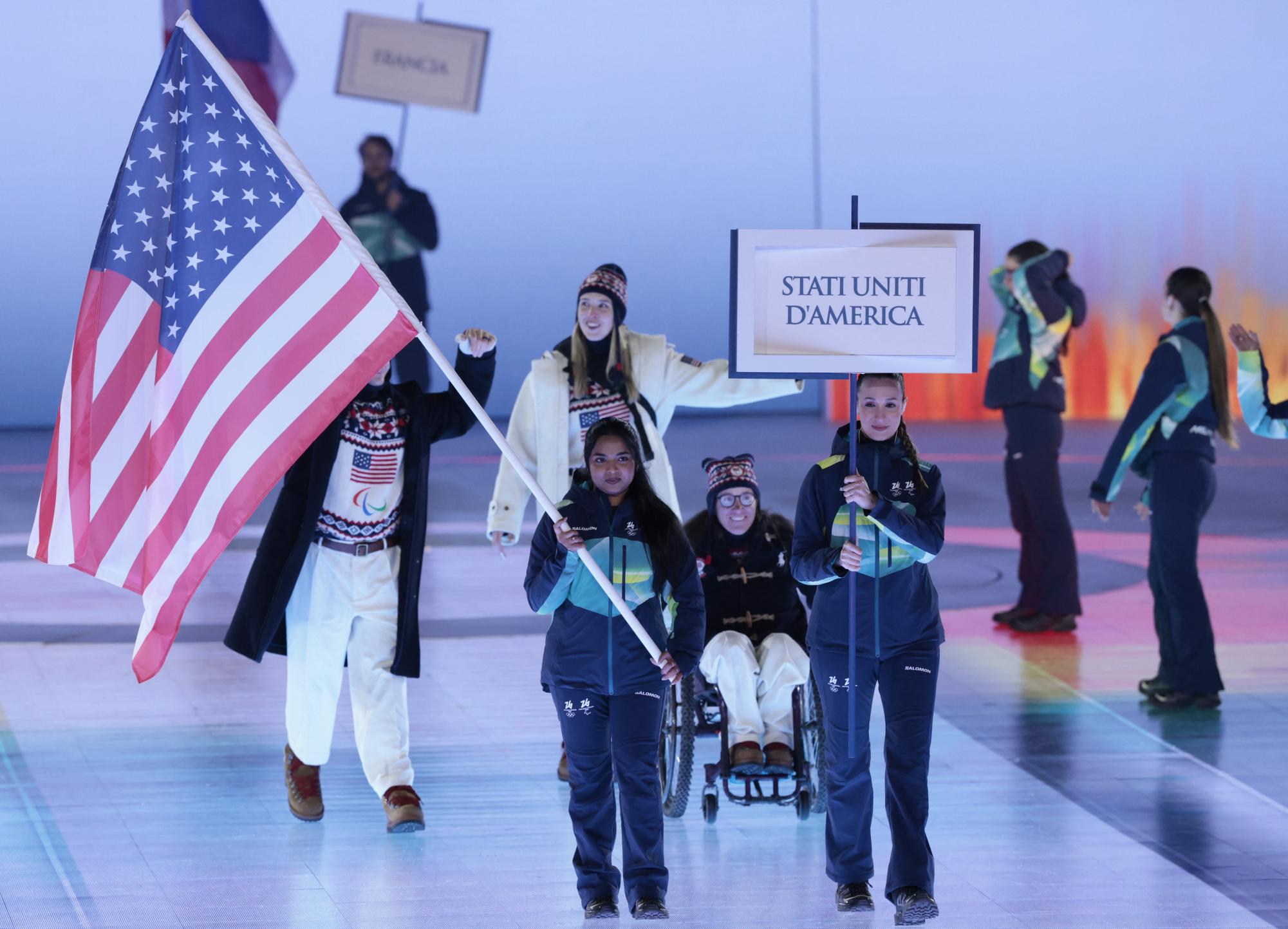
The Paralympics debuted in 1976, 52 years after the first Olympics, and allowed for athletes with physical disabilities to compete on the world-level. The name is a combination of “parallel”and “Olympic,” signifying that the games run alongside with the Olympics. March 6 kicked off the 14th Winter Paralympic Games, but much like most of the world, I had no idea this was going on or where to watch. Like me, you most likely tuned in for the 2026 Winter Olympic games, where about 2,900 athletes competed in over 16 sports over the course of two weeks. Now, 665 paralympic athletes are currently competing in Milano Cortina.
The Olympic Games stormed the media, much like they always do, getting people obsessed with peculiar sports such as curling, bobsled and even biathlon, a combination of cross-country skiing and rifle shooting. But the Paralympics have been struggling to even get any coverage, especially from large broadcasts including ESPN. The broadcasts that are covering The Games still have drawbacks including only covering in the morning due to other sports events like the NHL having “first priority” or ignoring the Paralympics altogether.
The lack of coverage leads to many more issues that completely eradicates the reasoning behind “para” in Paralympics. Not only is the lack of coverage unfair, it is completely ludicrous as well. Any professional athlete is very talented and can complete almost impossible feats that a normal person can’t even pretend to do — but imagine competing against the world’s-best with a limb difference or blindness. For example, Oksana Masters, a decorated gold medalist in para cross-country skiing and biathlon, was born with many congenital disabilities due to radiation poisoning. She also competed in the 2012 and 2016 Olympics for adapted cycling, adding to her roster of gold and silver medals. Masters was able to do this despite her double leg amputation, then learned how to cross-country ski, which is involved in biathlon and can be up to 20km of constant flat-land skiing. During para-biathlon, specifically the cross-country skiing, Masters competes in the sitting events, using her upper body strength to complete up to 12.5 km of racing. Through her separate events and her successful 2026 Winter Olympics, Masters has become the most decorated U.S. Winter Paralympian of all time.
Masters is just one of many athletes to compete at the professional level with a disability. Paralympians’ disabilities cannot possibly be a reason their talent is overshadowed by “abled” athletes, because para-athletes continue to prove time after time, they can stretch the realm of possibility even further than other athletes.