Mitski is an artist known for her slightly odd songs with poetic (and sometimes unintelligible or incomprehensible) lyrics. She’s also known to have albums that explore deep themes around loneliness, navigating adulthood or the complicated feelings that come with love. “Nothing’s About to Happen to Me” is her 8th album and her first concept album. A concept album is an album closely connected by a central theme or idea, and often does so through a story that follows a character. “Nothing’s About to Happen to Me” follows a reclusive woman as she struggles to get over a lover and find herself. She seems to be a “madwoman,” and she often intentionally isolates herself and has an intense fear of being perceived or judged. I’m a huge fan of concept albums, and as an even bigger Mitski fan, I was very, very excited by this album.
In a Lake: “In a Lake” is a fantastic start to the album, and is very quintessentially Mitski. It follows the main “protagonist” as she compares struggling to move on from her first love to living in a small town where only one type of soap is sold. No matter where you go, you smell it, and with it comes reminders of the first time you came to the town, or in this case, the first time the woman met her lover. The song itself is lyrically very comprehensible, but at the same time, tells a distinct story and carries a deeper meaning of clinging to a lost lover. Musically, instruments such as banjos are used, which really sells the small town feel. The song culminates with her expressing her desire to go to a big city where new things await her and where she can start over and leave her past behind her. Overall, it’s a great song, but not one I find extremely impactful to me personally. I’d give it a 7.5/10.
Where’s My Phone?: I have very mixed feelings about this song. On one hand, thematically, the song is relevant and very relatable. On the other hand, I don’t love the vocals or the actual musical aspect of the song. “Where’s My Phone?” requires the listener to watch the accompanying music video to fully understand the context of the song, but it follows a paranoid woman living in a gothic castle who is trying to protect her and her sister from intruders, and needs to find her phone to call for help. On a deeper level, the song represents modern attachment to technology and the anxiety that comes from it. This, of course, makes the song quite relevant for today’s day and age, and surely resonates with many listeners. However, musically, this song was not for me. The guitar had a very urgent tone, which was appropriate, but it almost felt flat to me and wasn’t very enjoyable to listen to. There wasn’t much buildup or development from the song, and I was waiting for it to end the entire time. The extremely distorted vocals at the end to symbolize the pinnacle of the woman’s panic also just didn’t do it for me. Because of this, this song gets a 5/10.
Cats: “Cats” is a shorter and slower song that ended up being very refreshing after “Where’s My Phone?” The song itself deeply connects to the larger themes of the album, with cats providing the character and also representing her solitude. The song highlights the character’s inability to move on, declaring she will never truly leave her lover. Yet, if they do leave, she takes comfort knowing her cats will be there for her. Cats prove central to the album’s narrative throughout, as cats are deeply important to Mitski. I loved this song’s slower and more melancholic feel, especially compared to the song before it. Musically, it was deeply comforting. I also love the connection back to “In a Lake,” and these types of callbacks to the songs prior in the album make it feel more connected. Overall, this song gets an 8.5/10 from me.
If I Leave: This song, in my opinion, was intended to be one of the standout tracks, but I think it fell just a little flat to me. Lyrically, it’s one of my favorites on the album. The character is lamenting not only her inability to leave her lover behind, but also the fact that no one could love her as he did, but she’s replaceable in his life. She recounts how she opened up to him and her struggles, and I love her comparison of her life to a dark tunnel. The song is very reminiscent of one of her older songs, “Francis Forever.” Where this fell flat for me, though, was again the music. It just wasn’t very strong. There was supposed to be a big build up, but it peaked at some mildly intense instrumentals, before petering out quite quickly. I think the song needed to be about a minute longer to give the listener more time to really get invested. With that being said, Mitski did a great job boiling down complex emotions into something digestible, so I’ll give this song a 7/10.
Dead Women: By this point in the album, “Dead Women” has by far proved to be my favorite. The song is largely a commentary on how men change women’s stories after they die to create a narrative that fits their needs and wants more. It highlights the idea that women’s lack of agency doesn’t just exist while they’re alive, but follows them into death as they are shaped into different versions of themselves. The almost haunting instrumentals are distorted and difficult to place, mimicking women’s stories and lives after death. Mitski’s character remarks that she feels that her ex-lover would have preferred if she had died, so it would be easier for him to twist her story. I love how Mitski was able to take a larger idea surrounding women in society and closely connect it to the character’s story in this album. The instrumentals fit the song great and thematically it’s fantastic, so I’ll give it a 9/10.
Instead of Here: This was another song that, thematically, is really outstanding. The character, downcast and struggling, is really starting to seriously question her place in the universe, and consequently has interactions with death. These interactions are, by my interpretation, her toying with suicide — though the meaning is largley up to interpretation. No matter how you choose to interpret her relationship with death, the latter seems to be a feminine,maternal presence and confidante who sympathizes with the characters early maturity and loss of childhood. The character is living perpetually in this inbetween state where instead of partaking in things that bring light and joy to her life, she’s lying on the floor, or talking with death. This song was probably the most fun for me to pick apart, and I love how the chill vibe from the last couple songs carry over into this one. It’s another deeply melancholic song, but Mitski’s melancholy is one that can be deeply felt by those who understand what she’s trying to say. This song is a 9.5/10 for me.
I’ll Change for You: This song is another stand out favorite for me. I interpret this song to be the character drunk dialing her ex-lover drunk with its desperate lyrics and references to her love of bars. It’s not as deep or complex as some of the other songs, but it’s a song that really highlights the character’s desperation and struggle as she continues to be bogged down by this yearning for what she doesn’t have anymore. She’s willing to sacrifice who she is at her core to be loved again. The song has a jazz feel to it and stands out musically from the rest of the album, and I think it really works. Additionally, vocally, this song is the best so far. Her voice is soft and lilting, and the belting at the end adds a lot of depth and emotion, and because of that, this song gets a 10/10.
Rules: This song is another song that I felt was good, but not fantastic. It’s an upbeat song that contrasts against a heavier theme of the character reinventing herself completely as a result of this loss of her lover. It highlights the lengths people are willing to go to reinvent their lives. The song also starts and ends with a count to six at a very odd cadence, with each number representing a point in their relationship and the character’s life. The counting felt out of place, as the cadence didn’t really match the beat of the music and threw me off. The instrumentals are fine — peppy and nice, but nothing to really write home about. I’m not mad at this song by any means, it just didn’t really blow me out of the water. 7/10 for me.
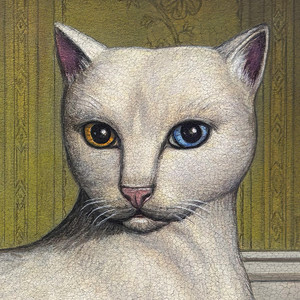
That White Cat: This was an interesting song with a kind of peculiar symbolism. The song is about a white cat (the one pictured on the album cover) taking control of the character’s house and symbolizes her loss of control over her own life. She feels like a guest in her own space that she’s paying for and working for. In the context of the rest of the album, the vocals and instrumental choice makes sense. It feels frantic and almost panicked. Mitski raises her voice the most she ever has in the album, and the music represents her fast hurtle away from her identity and normalcy. With that being said, I can’t say I loved it. As with most of her songs, symbolically and lyrically I like it, but I can’t ever see myself really wanting to relisten to this song. The instrumentals really just don’t do it for me to really enjoy the song, so it’s a 6/10.
Charon’s Obol: This song may be my absolute favorite off of the album. The title “Charon’s Obol” refers to an ancient Greek tradition where people would bury loved ones with an obol, a coin, so their soul could pay Charon to cross the river Styx into the underworld. This idea connects to this song as a woman (it’s unclear if this is the character the album has been following, or a completely separate woman) moves into a house where she finds a collection of dogs who belonged to previous women who owned the house. She ends up taking care of the dogs, and in doing so, attempts to “heal” the house and avoids being taken by death herself. The Greeks would honor the dead by giving them an obol to pay for their crossing, and the woman honors the women’s deaths by taking care of their dogs. While this song seems to sit separate from the rest of the album, it connects to the broader themes of lingering on the presence of the past. The background vocals were exceptional in this song, and it had all of the things that make Mitski songs so good: eerie instrumentals, good vocals and excellent story telling. Another 10/10.
Lightning: “Lightning” was a really good way to end the album. It’s a short and sweet culmination of all of the feelings and themes that have been explored throughout. The album ends with the character finally being ready for death, which connects back to her interactions with death in “Instead of Here.” She envies the freedom rain seems to have, and hopes that when she dies, she can be reborn into something that free and uninhibited. The song is formatted in a very Mitski manner with the most explosive and impactful part of the song being towards the middle, with it fading in and out in the beginning of the song. It’s written poetically, and feels like a very good conclusion to the character’s story. However, it didn’t hit quite as hard as some of the others on the album. All in all, I’ll give this song an 8.5/10.
As a whole, this album was very solid. Out of all of the Mitski albums I’ve had the pleasure of listening to, it’s one of the better ones. Concept albums are hard to do, as they can often feel redundant. But with this album, the songs were all connected without feeling like they were saying the same thing over and over again. The allusion and symbolism was great and really added to the overall complexity of the album. The album overall gets a well-earned 8/10. The instrumentals could feel choppy and frantic at times, but that’s a minor gripe for an otherwise stellar record.