-
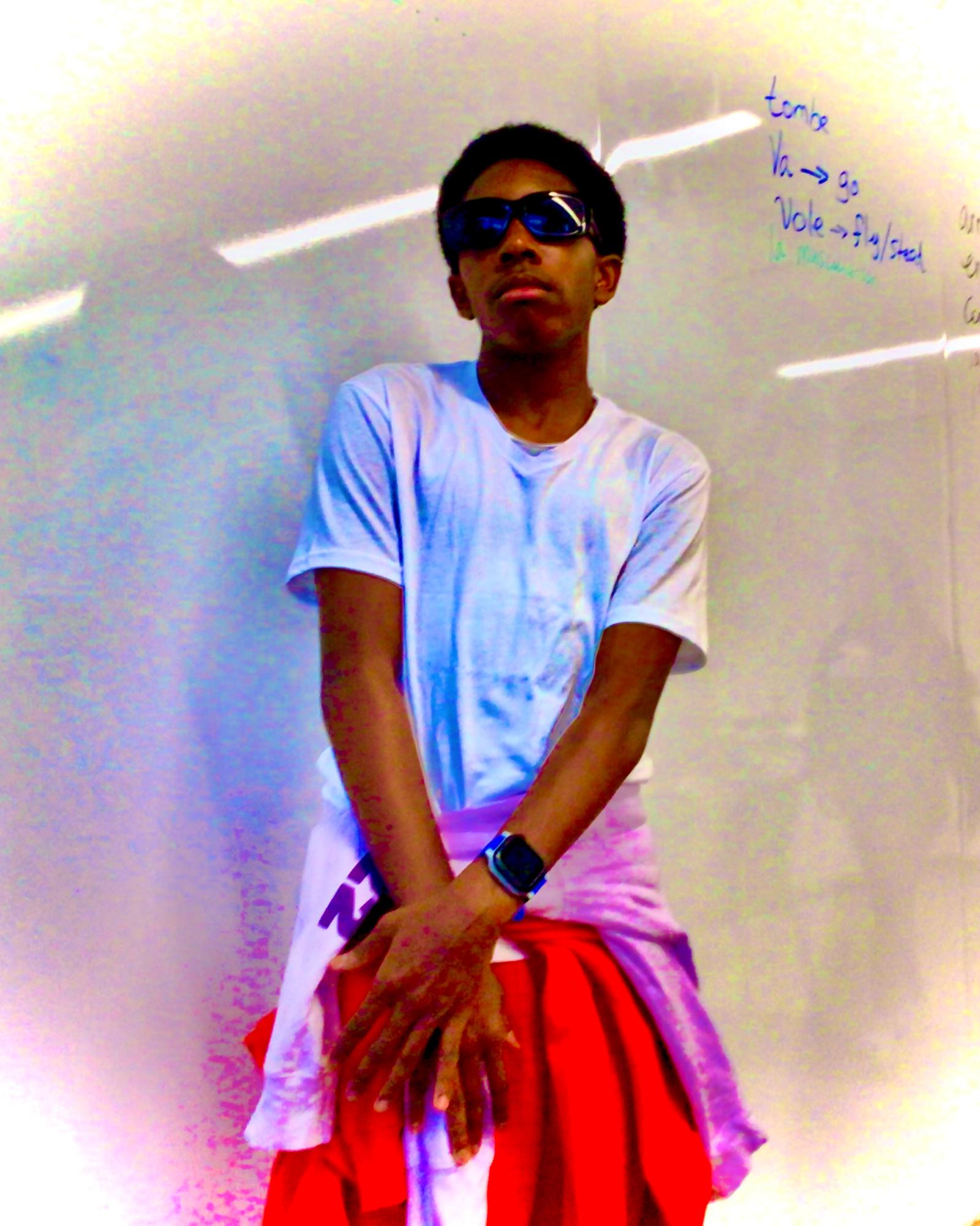
Spencer sports a neon inspired outfit. When Spencer had just started experimenting with outfits, he often used bright, clashing colors that represented his personality. “I like to express how social and outgoing I am,” Spencer said. “If I went on a road trip with you, it would take me an hour to start telling you my entire life story.” Photos courtesy of Tariq Spencer.
-
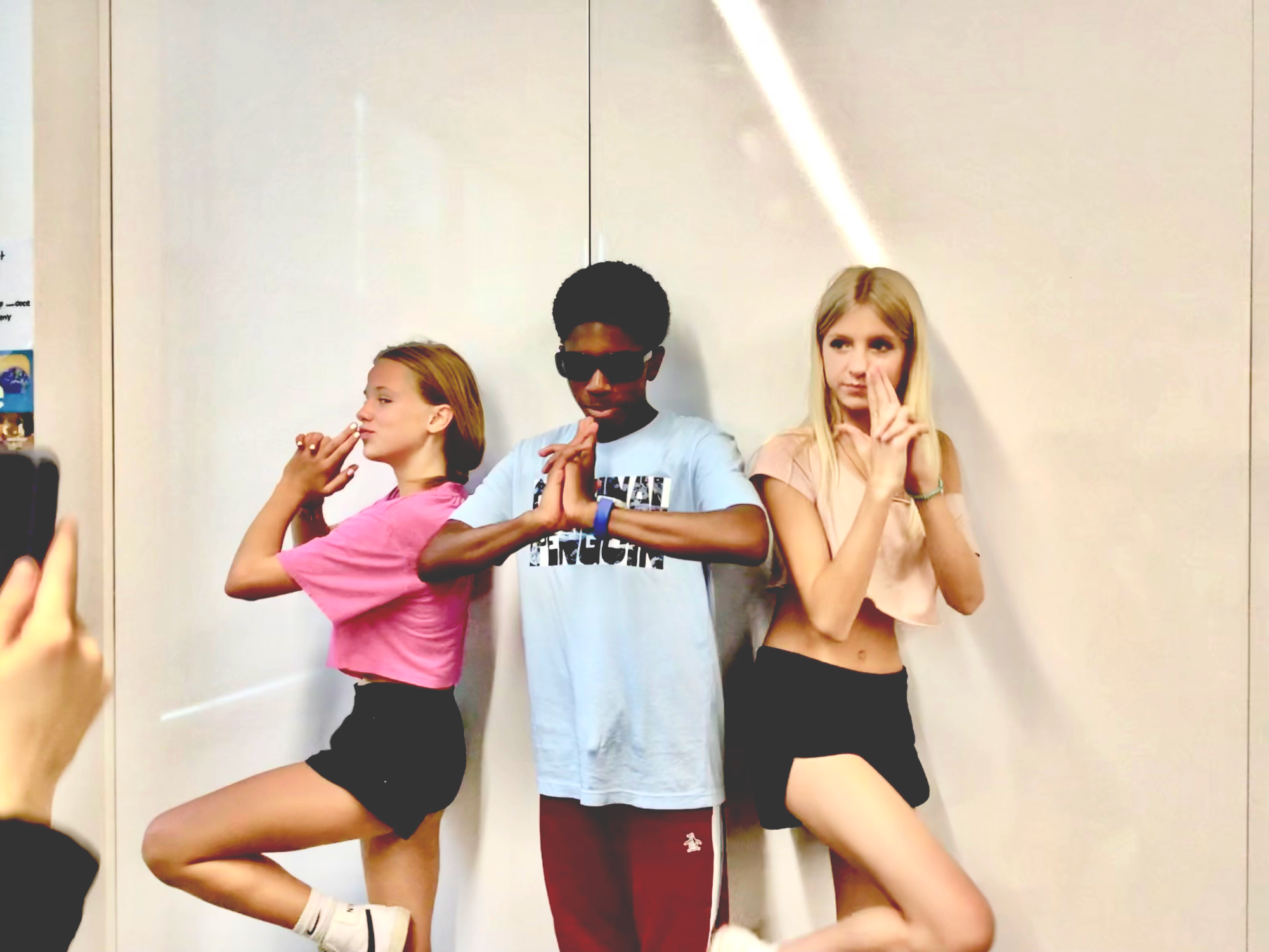
Spencer dons a pair of sunglasses while posing with a finger gun. His exploration of fashion began after moving to the Ladue School District. “Before fourth grade, I never thought about my clothes,” Spencer said. “My mom would iron our clothes at night and pick out [my] clothes and everything.”
-
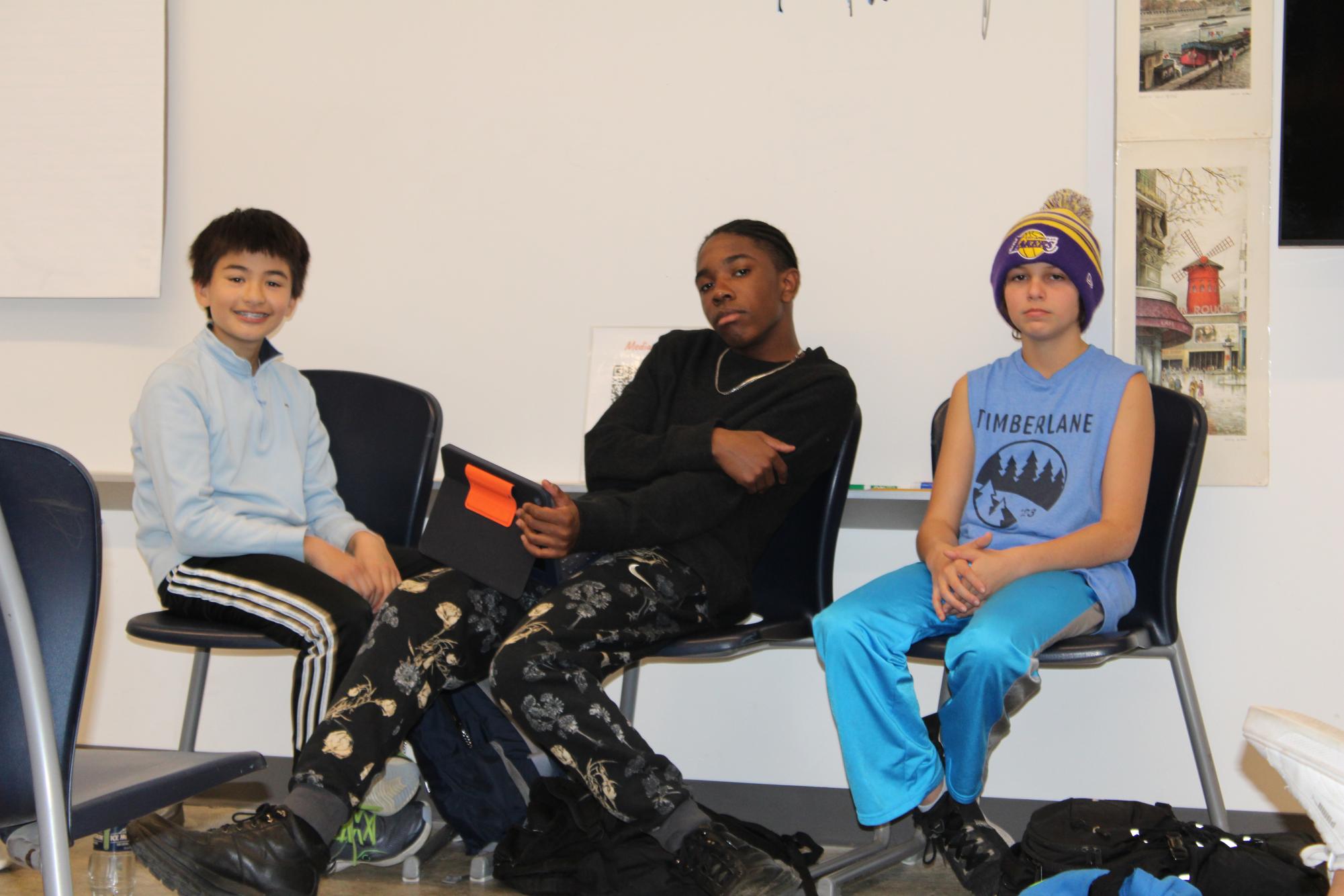
Spencer poses with an all-black outfit with his middle school peers. While Spencer’s peers have criticized his sense of fashion, he has used the criticism as an opportunity to grow. “I get inspiration from the people around me,” Spencer said. “That’s why I always ask people what I should wear, because I get really good insight from people, even if it is a bit harsh sometimes.”
-
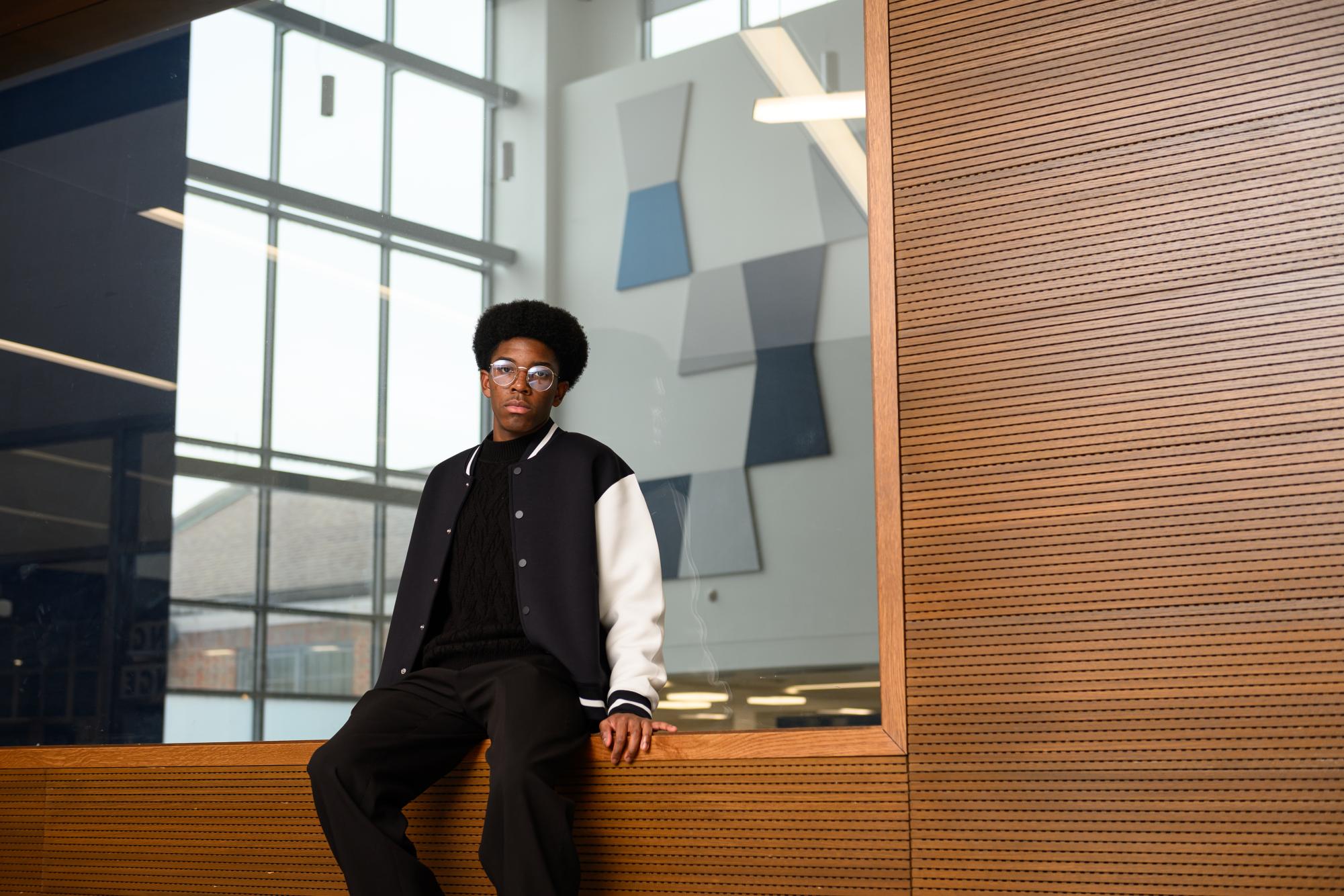
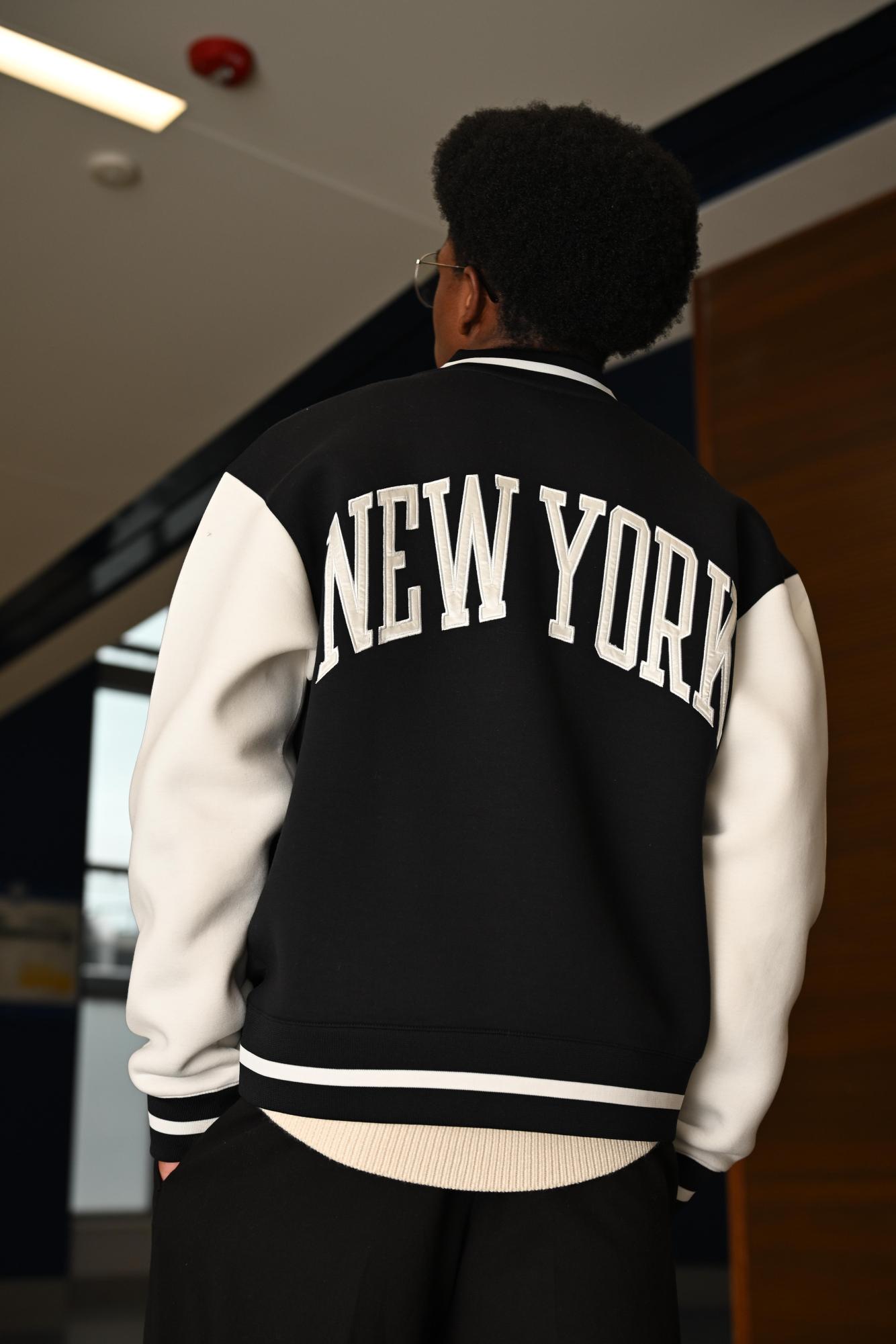
Tariq Spencer (9) poses with a New York themed outfit. His outfits often employed a mix of colors, orange being his favorite. “I focus on items that pull me,” Spencer said. “It’s mostly the color; I’m not gonna buy a color that I don’t have because it’s really hard to match it.”
-
Tariq Spencer (9) poses with a New York themed outfit. His outfits often employed a mix of colors, orange being his favorite. “I focus on items that pull me,” Spencer said. “It’s mostly the color; I’m not gonna buy a color that I don’t have because it’s really hard to match it.”



A ringing bell pierces through the air, students rushing through the hallways. Amidst all this chaos, one thing stays monotonous — hoodies, sweatpants, baggy jeans, crop tops — all in dull, gray-scale tones. Suddenly, a flash of color emerges. A lively, contagious energy fills the hall. Talking with friends and brimming with style, the presence of Tariq Spencer (9) can be felt from more than a mile away. Growing up in Ferguson, Mo., Spencer moved to Ladue in fourth grade. However, this change of environment posed many challenges and led to social problems.
“It started around fifth grade,” Spencer said. “I was very sad all the time. I didn’t have any friends. I got bullied a lot too, so it wasn’t the best time for me. But the one thing I felt like I could do was pick out my own clothes.”
Because of these struggles, Spencer knew something had to change. As he searched, he realized that fashion and creating outfits gave him a sense of self.
“One day, I had this epiphany,” Spencer said. “I [wanted] to start being a new me, and I started picking out my own clothes. It grew from there. When I was going into sixth grade, I had an even bigger epiphany. I was like, ‘I want to change everything about myself.’”
Beginning in sixth and seventh grade, Spencer adopted a very flamboyant style. Often consisting of clashing colors, it allowed him to learn about different styles and grow his passion for fashion. In eighth grade, Spencer transitioned to home schooling, which gave him time to be alone for an entire year. He took this time to reflect on himself, which culminated in a maturing of his style.
“You don’t have to be all colorful and bright all the time,” Spencer said. “It’s okay to just wear something normal. And I feel like that’s how I’ve changed over time. I went from being very flamboyant and just rambunctious in my style to being more open to new ideas.”
In his outfits, Spencer uses a variety of brands, ranging from Nike to Adidas to American Eagle to H&M, each item having a story behind their use and inspiration.
“I love Adidas,” Spencer said. “It was probably the first brand that I really connected to when it came [to] style. [Originally], I was like, ‘Nike is the worst.’ My dad, he really likes Nike. I started looking in Nike stores and out lets, and I was like, ‘I really like these clothes.’ Now I have an appreciation for Nike and Adidas, and Nike was one of the main brands that I started my style journey [with] and I just want to express that. Nike has helped my style grow and develop, especially because there’s so many different options.”
Through this exploration, Spencer has developed a very fluid and flexible style. In particular, he enjoys outfits employing Y2K and grunge aesthetics.
“I see my outfits like my children,” Spencer said. “I created them, and I have such a deep connection with them. I would say one of my favorite outfits would probably be what I wore on the first day of school. It was some American Eagle jeans, a white collared shirt and light blue and white Air Forces. I feel like it was an outfit that I’ve been wanting to wear for a while, and I just never got to. So when I wore it, I was like, ‘I finally achieved something.’”
Throughout the years, fashion has evolved to truly become a fundamental aspect of Spencer’s identity. Even though it sometimes stresses him out to choose an outfit in the morning, it is a fulfilling, good type of stress that motivates him to represent himself through his style.
“Usually what I’m wearing depicts how I’m feeling,” Spencer said. “If I show up to school one day in my favorite pair of pants or my favorite color, then you’re gonna know I’m really happy. But if I show up to school one day looking like I’m a homeless person, you’re probably going to guess that I’m really sad because I’m not worried about what I’m wearing.”
In addition, Spencer draws inspiration from the people around him. He takes in standout colors and clothes and incorporates them into his own style. To Spencer, fashion is his outlet of creative freedom. Even with his expertise, however, he still faces challenges when coming up with outfits.
“Sometimes I’ll find myself with a creative block, like when artists don’t know what to draw or when writers don’t know what to write,” Spencer said. “I have a flow of really good outfits that’ll coordinate really well, and they’ll have all different styles. And then I’ll have this block one day and it’ll be like, ‘What do I do?’”
This openness with fashion and expression also translates into his personality. He’s loud, energetic and loves to talk about fashion with his friends and peers.
“[Fashion] is very important to him,” Spencer’s friend, Gus Klaverkamp (9), said. “It means a lot to him what he’s wearing, because I hear him talking about it a lot and what other people wear.”
Spencer also helps others with their outfits, commenting on suitable colors and possible ways to style certain pieces of clothing. To him, having style is something much more important than most people realize.
“[Style] is so overlooked and it’s so misunderstood that I have almost this anger inside of me,” Spencer said. “It’s such a big part of your life. No matter what, in my opinion, style is something that will always impact [people]. One of the main [reasons] people get bullied in the first place is because of what they wear.”
In the future, Spencer plans to become a lawyer. While lawyers are often stereotypically known to wear suits, he wants to work towards changing those stereotypes.
“I want to be able to change so many things when it comes to fashion,” Spencer said. “I want to change the way people see fashion, the way people see formal wear. I want to wear something fun. I want to wear something that expresses me. That’s a part of myself that I will always carry. I will always want to express myself even when I’m an adult.”
Fashion has given Spencer an opportunity to truly embrace his identity and grow through that experience.
“If I hadn’t changed my style, I wouldn’t be the same person I am today,” Spencer said. “While most people think that fashion and style [are] silly, it really does have a bigger impact on who you are and your personality.”
![Calvino Hammerman (11) stands and speaks at a podium. Hammerman testified independently at hearings, unaffiliated with any organization. “This is all independent for me,” Hammerman said. “I think it’s really important for average people [to be] going out there and sharing their voice, because that’s all I’m doing.”](https://laduetoday.com/wp-content/uploads/2026/01/Screenshot-2026-01-29-at-2.17.47-PM.png)
![Xinyi Lu waves his baton as he conducts concert orchestra class. For two years, he’s worked with Sarah Heuermann to direct Ladue’s orchestras. “[My favorite piece Ladue’s played] is Dies Irae, from last year,” Lu said. “The emotion of that piece is very strong, and I could clearly feel what Mozart [wanted] to express.”](https://laduetoday.com/wp-content/uploads/2026/01/Screenshot-2026-01-08-at-12.08.04-PM.png)
![Mortimer supports students during wrestling practice. Despite having participated in cross country and track in college, Mortimer had more motivation to coach wrestling. “Football and wrestling have always been my passions as far as coaching,” Mortimer said. “[They were] the sports that I enjoyed playing the most. I liked track and cross country, but I didn’t have any interest in coaching them.”](https://laduetoday.com/wp-content/uploads/2025/12/VEH_2364-1200x800.jpg)
![A young Vuohelainen skis on Levi, a resort in Lapland, Finland, and climbs at Sepänpuisto, a park near her house. Her time in the U.S. made her miss the familiarity of home. “[I] miss my friends and family [in Finland],” Vuohelainen said. “Everyone just clicked.” Photos courtesy of Iris Vuohelainen.](https://laduetoday.com/wp-content/uploads/2026/01/Screenshot-2026-01-08-at-11.07.21-AM.png)