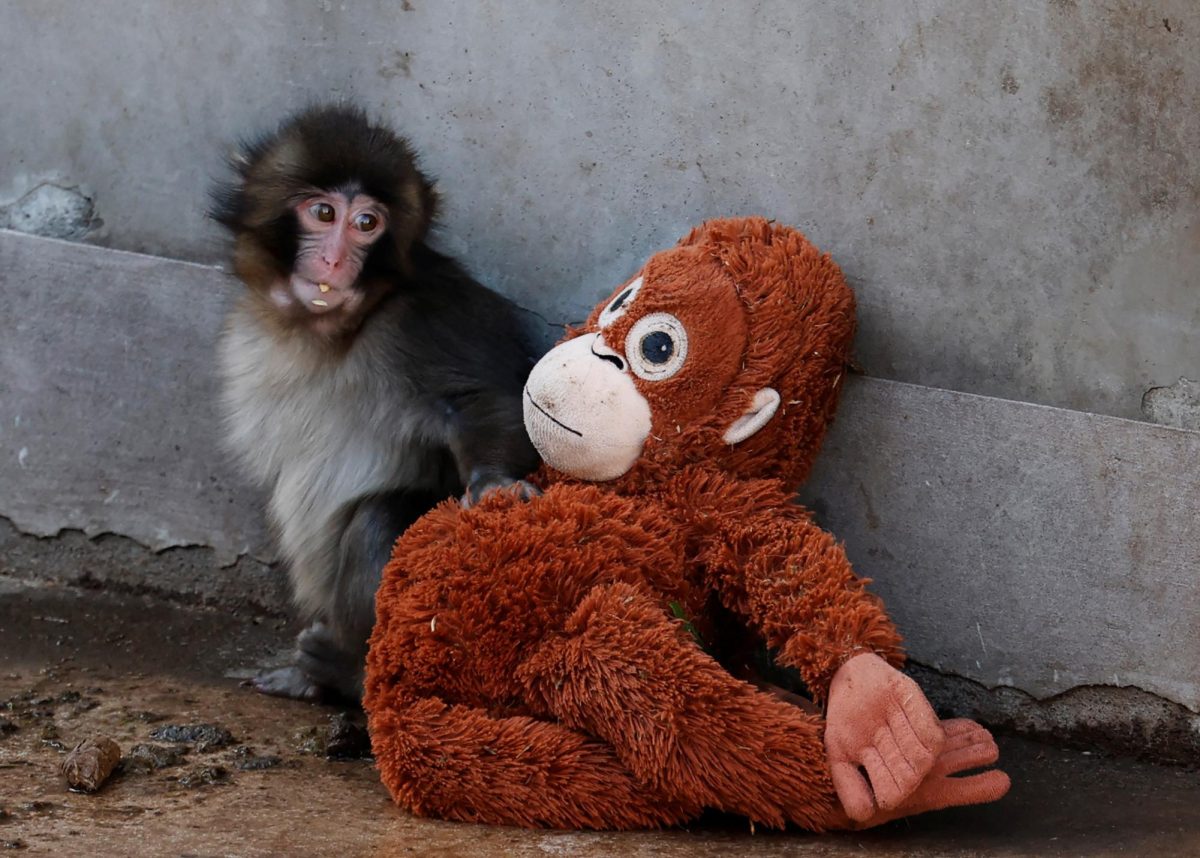
If you’re online frequently, you’ve probably come across a bittersweet photo of a cute monkey dragging around a stuffed IKEA orangutan. The photo depicts Punch, a 7-month-old macaque monkey at a zoo in Japan, and it stole people’s hearts worldwide. People’s empathy for Punch was wholesome, but greater public interest in a monkey rather than humanitarian issues highlights the problem of selective empathy in our society.
Punch was born in July at Ichikawa City Zoo, and he was abandoned by his mother. He was his mother’s first baby and was born during a heat wave, which zookeepers say could have been factors of his abandonment. After being nursed by the zoo staff, he was released, only to have trouble connecting with the other monkeys. In response, the staff decided to give him a stuffed orangutan as a source of comfort and to help him build muscle strength, something most monkeys do by clinging to their mothers. Quickly after, videos of Punch being bullied by the other monkeys and clinging to his orangutan blew up worldwide. He became so popular that 8,000 people visited the zoo one weekend in February, which was double the amount of visitors the zoo had the same weekend last year. People are spreading hashtags such as #HangInTherePunch, they’re reposting videos all over social media and they’re even rushing to IKEA to buy the same stuffed animal that Punch loves. As an animal lover myself, my heart also melted when I saw the video of Punch playing all by himself. While the public response to Punch’s story has been heartwarming, when we zoom out and look at how that differs from the response people give to humanitarian issues, there is a clear problem.
Our society has developed deep selective empathy when it comes to feeling compassion for different living beings. I noticed this when scrolling on Instagram and seeing people posting about Punch. While it was sweet, many of the same people that posted about Punch have been silent about Gaza, Iran and other humanitarian crises. One may argue that it is easier to feel empathy for animals because they are never in the wrong, but the same applies to children in war torn regions. So why do people stop and react to a monkey, but mindlessly scroll past photos of child amputees or photos of ruins that were once people’s homes?
There could be countless reasons as to why this is, like how people usually go online for quick dopamine hits, not reality checks. But this issue is deepened by the dehumanization that occurs and how people have become desensitized to atrocities worldwide. Everyday, people read headlines of death tolls and statistics that only skim the surface of the true horrors that many people face. It’s easy for many to forget that behind the statistics are stories and real people’s lives. Additionally, the frequency at which we see posts on atrocities can cause people to be desensitized. It is this combination of dehumanization and desensitization that is incredibly dangerous and allows for injustice to continue in our world. It is what breeds the deep issue of selective empathy.
So I ask you to never let yourself go numb to these issues. Never just scroll past headlines with important news. Never turn a blind eye to photos of people in need. But most importantly, never lose your humanity.