-
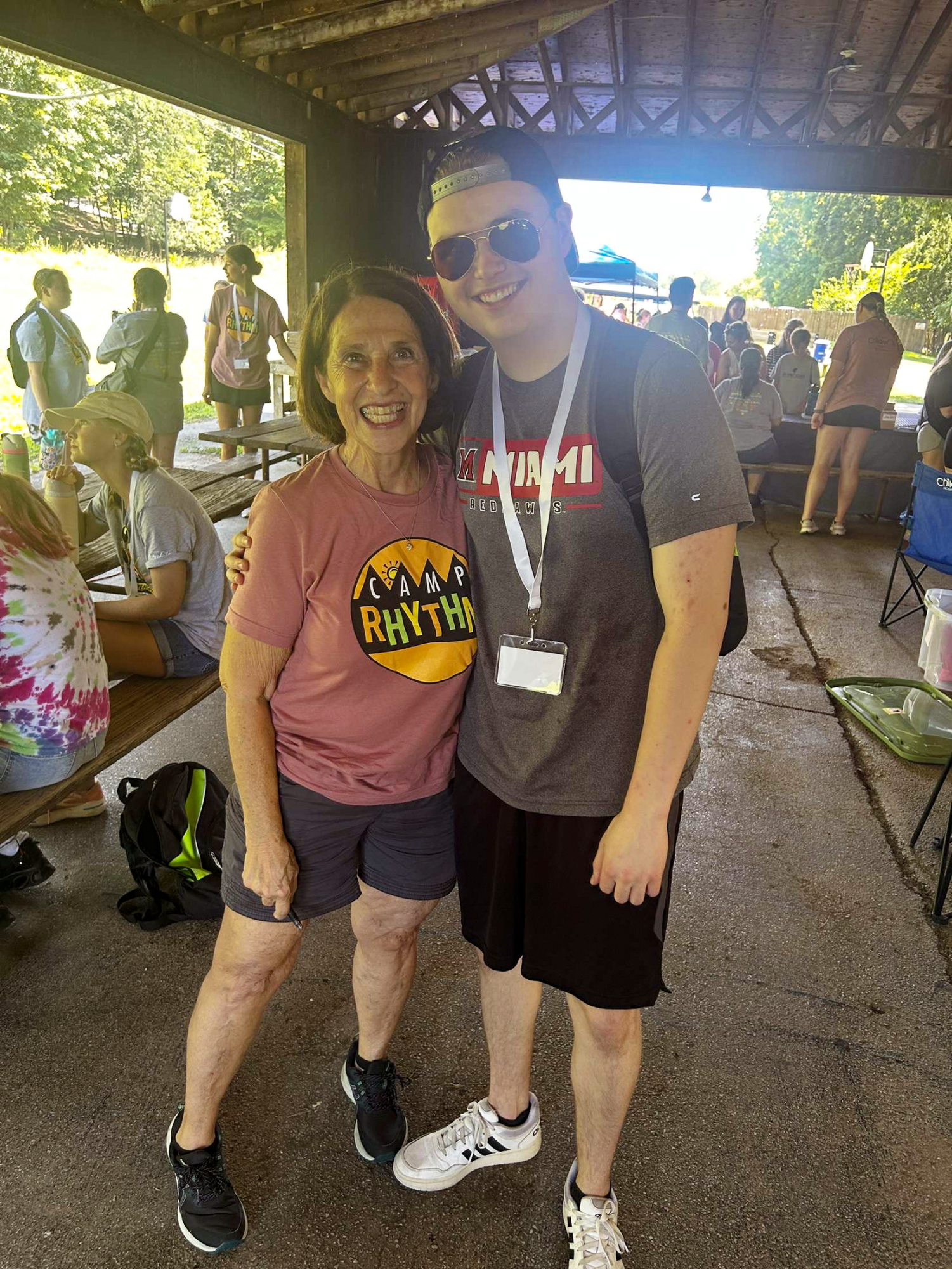
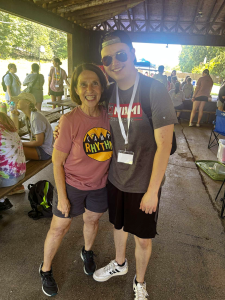
Bullinger stands for a photo with another volunteer at Camp Rhythm. The success of the camp was made possible with the help of community and hospital volunteers. “All the directors there [are] nurses and volunteers from Children’s,” Bullinger said.
-
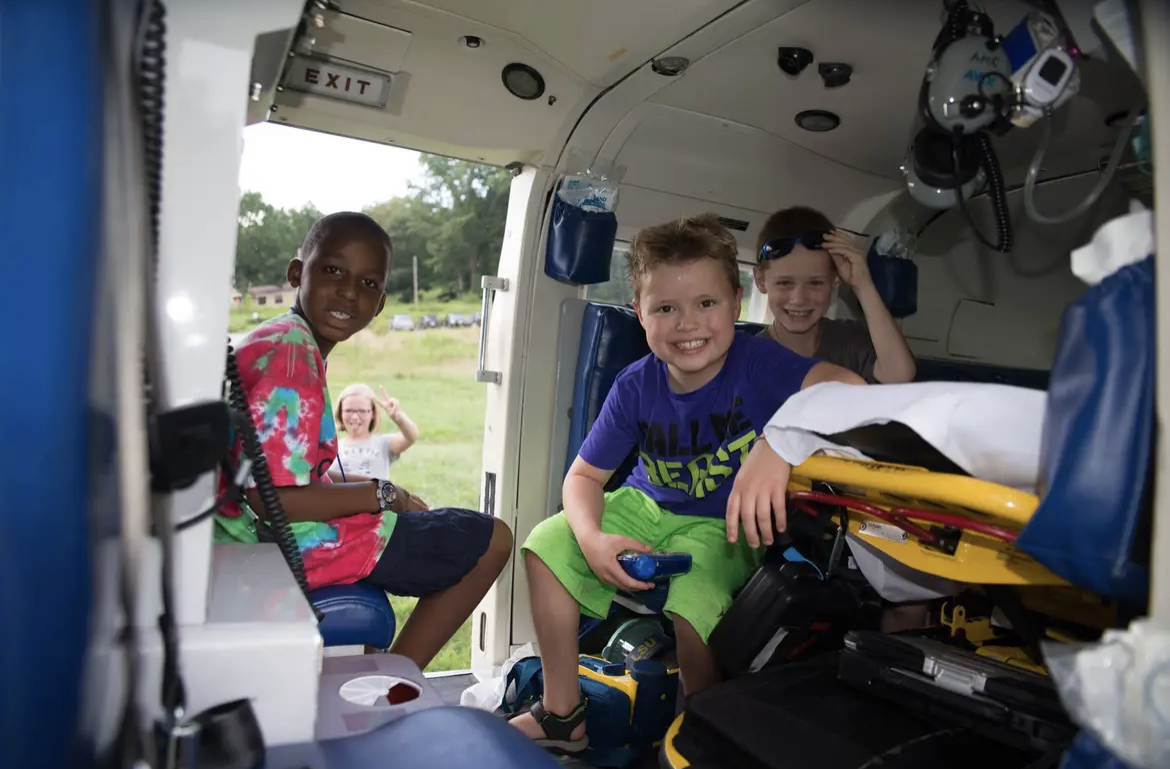
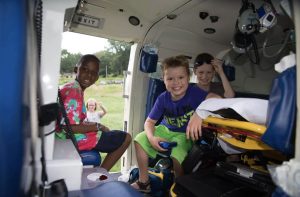
Bullinger participates in camp activities and interacts with other campers. He was introduced to the camp by a nurse at the St. Louis Children’s Hospital. “It’s pretty big within the St. Louis area for kids with heart disease,” Bullinger said. “It’s posted all over the cardiology department at Children’s, so it’s well advertised.” Photos courtesy of Grant Bullinger.
-
Bullinger participates in camp activities and interacts with other campers. He was introduced to the camp by a nurse at the St. Louis Children’s Hospital. “It’s pretty big within the St. Louis area for kids with heart disease,” Bullinger said. “It’s posted all over the cardiology department at Children’s, so it’s well advertised.” Photos courtesy of Grant Bullinger.
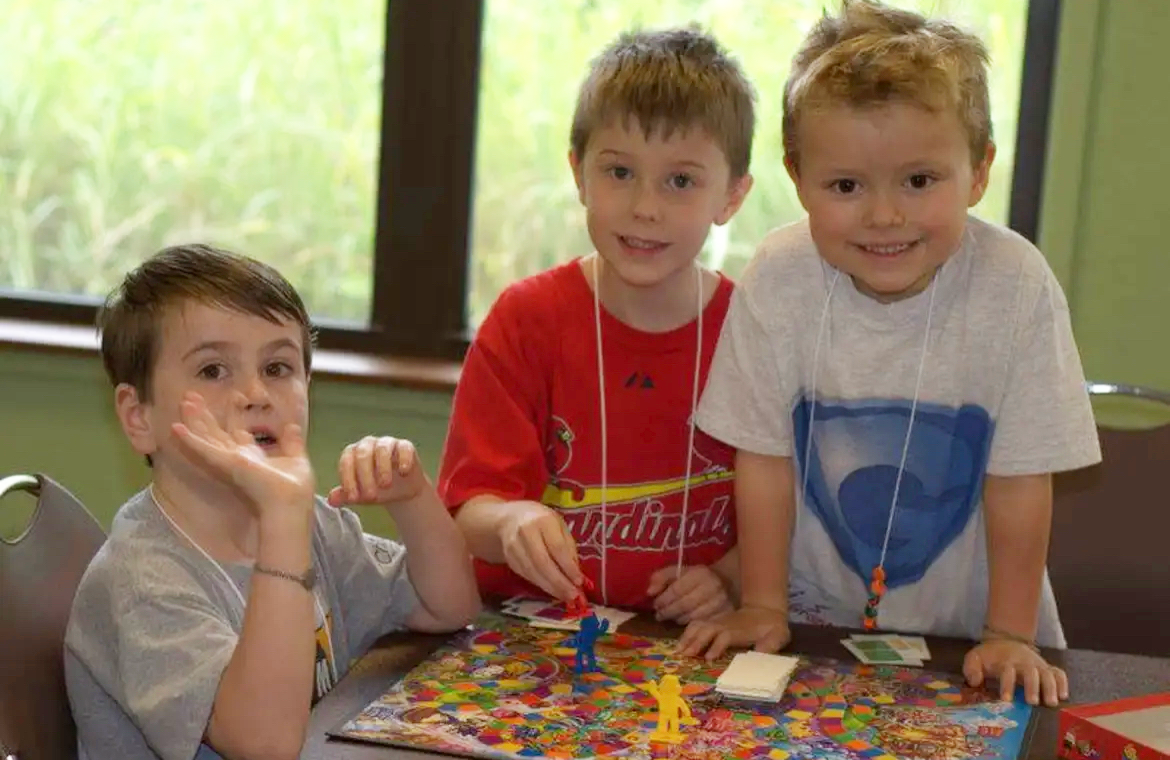
A rich, smoky aroma drifts through the air from the crackling campfire. Its bright orange flames light up the evening sky, casting shadows on the smiling faces of the campers gathered around the cozy campfire as they enjoy a decadent s’more. As the night unfolds, the fun continues with dance parties, movie nights and carnival games. This is how Grant Bullinger (12) spends a night at Camp Rhythm, a camp designed for children with heart defects.
Bullinger’s connection to Camp Rhythm traces back to his early childhood when he was diagnosed with three congenital heart conditions — levotransposition of the greater arteries, pulmonary atresia and ventricular septal defect.
“I was about 20 weeks pregnant,” Bullinger’s mom, Lisa Pappalardo, said. “I went in for what I thought would be just my typical ultrasound, and [the doctor] said they wanted us to come back. It was very emotional because I knew nothing about congenital heart defects in children, and so I had a whole lot to learn. It was very scary and very sad because I didn’t know if my little boy would live. I didn’t know if he would be born. If he was here, I didn’t know what kind of life he would have.”
Bullinger has attended Camp Rhythm for 14 years, starting when he was 4 years old. He was first introduced to the camp during frequent stays at the hospital due to his heart conditions.
“[I heard about the camp] from a nurse at the Children’s Hospital [who] told my parents about it, and that’s how a lot of our families hear about that,” Bullinger said. “It’s pretty big within the Saint Louis area for kids with heart disease. It’s posted all over the cardiology department at Children’s, so it’s well advertised.”
Located in Eureka, Missouri, Camp Rhythm is a week-long overnight camp sponsored by the St. Louis Children’s Hospital. The camp allows children with heart problems, including Bullinger, to connect with peers who share similar experiences.
“Its whole goal is not only just to bring the community closer together, but show those kids that [they’re] not alone,” Bullinger said. “It’s a normal camp [and] it gives those kids a chance to just be normal.”
In addition to being a lifelong camper, Bullinger returns to the camp each summer and has volunteered as a junior counselor for the past two years. In fact, the success of the entire camp is made possible with the help of community volunteers.
“What inspired me to be a counselor is [because] it’s become like a family for me, especially for the people who have been there as long as I have,” Bullinger said. “I want to keep giving back [and] give the next generation of heart kids a chance to experience that same joy that I felt while I was there. I keep going back because it’s like a home away from home.”
As a junior counselor, Bullinger led small groups of children through various camp activities, ranging from rock climbing and fishing to archery and swimming. There, he was able to form meaningful connections with the campers and create some of his favorite memories at camp.
“One thing that I love seeing every year, especially with the little boys, is when they all take off their shirts for the first time to go swimming,” Bullinger said. “They all see the giant scars on each other’s chests, and they get so excited, like ‘I have one of those too’. And then they all start showing off their surgery scars.”
Bullinger’s journey has been far from easy, but he’s learned to adapt and overcome those challenges. His journey has allowed him to volunteer with different heart organizations, including the Ollie Hinkle Heart Foundation, Mighty Oaks Foundation, American Heart Association and Jump Rope For Heart.
“The biggest challenge is just understanding that I will be limited in life compared to my peers,” Bullinger said. “I can’t always do what everyone else is doing, so I’ve had to accept that. At the same time, that’s just a minor thing, but compared to the positivity that I’ve experienced just from the heart community, it outweighs [the challenges].”
Bullinger first learned about his heart conditions at a very young age. His parents created a personalized picture book to help him understand his heart conditions and provide support along his journey.
“When we started reading to him, one of the things we did was we wrote his story,” Pappalardo said. “We had pictures from the hospital, and we told him in the book how wonderful and unique he was, how strong he could be, how he was so loved and how he had nothing but amazing, special people that were in his life to help him be strong.”
On a daily basis, Bullinger encounters certain challenges when it comes to physical activity. He relies on a pacemaker, a small metal device, to regulate his heartbeat through electrical impulses, which limits the activities he can safely participate in.
“He’d always wanted to play hockey,” Pappalardo said. “His older brother and his younger brother played, and it’s really frustrating for him because he has the energy to play hockey, but he couldn’t be checked because he has an implanted pacemaker.”
In total, Bullinger has undergone six heart surgeries, all of which required him to travel to Stanford to receive the surgery. While this may pose situational concerns for some, Bullinger has a stable support system from his family and friends.
“My family is always there for me,” Bullinger said. “Say I go to have surgery somewhere that’s not home, I have family who lives in that state. If I go to [get] surgery in California, I stay with my uncle who lives in California. So, it’s not just my intermediate family. It’s all my family who’s been there to support me, even outside of heart stuff. They support me with my passion for veterinary medicine.”
Specifically, Bullinger continues to develop his passion for veterinary medicine through his involvement in Health Occupations Students of America (HOSA), an international organization that prepares students for careers in healthcare. Bullinger competed in vet science the past two years and qualified for state both years.
“I’ve always had a passion for veterinary medicine,” Bullinger said. “[HOSA has] given me new opportunities to meet more people and it’s widened my perspective on what chances or what opportunities I have for the field.”
Along with his family’s support, Bullinger receives encouragement from his classmates and teachers, such as science teacher and veterinarian Allen Weltig. Bullinger was a student of Weltig’s Human Body Systems and Comparative Anatomy and Preventative Animal Wellness Service (PAWS) class.
“[I’m] basically an encyclopedia for him,” Weltig said. “Any question he has, he often comes to me first. [I give] him advice on steps and things that he can do and things to focus on to position himself to achieve what his goal is currently.”
Bullinger currently serves as a Member-at-Large of Ladue HOSA. Weltig highlights his commitment and dedication to the organization, which sets Bullinger apart from other HOSA members.
“Anytime there’s anything that needs to be done, he was there, willing to help,” Weltig said. “He was there for every meeting. He never missed anything. He was always willing to offer his help to do things in a way that an average member doesn’t always do.”
Furthermore, Bullinger attended the HOSA International Leadership Conference this summer to teach a dog phlebotomy class with Weltig. In the class, students compared models of human veins with models of dog veins and performed phlebotomy on dog models.
“Grant, having had gone through PAWS and done the [activities], was a natural fit to be my assistant,” Weltig said. “I needed somebody who’s comfortable showing how to do the restraint and Grant [could] probably do it with his eyes closed at this point. He was helping the students get through those models as I was overseeing and instructing. [He was] really the teacher of phlebotomy.”
As Bullinger prepares for college, he plans to earn a bachelor’s degree in biological sciences and pursue veterinary school. His personal experience as a camp counselor and HOSA officer have enhanced his interest in the veterinary field.
“He’s probably the most passionate student for veterinary science that I’ve seen come through,” Weltig said. “What makes him stand out is how consistent he is about it. There’s zero doubt when you hear him talk about it, there’s nothing else that he cares more about. I think his personal medical experience gives him a really strong understanding of what health care is about.”
Despite the setbacks he has encountered from his heart conditions, Bullinger has learned to view them as a positive aspect of his life. It has allowed him to find a sense of belonging in the heart community and make an impact on future generations of heart kids.
“Overall, besides the rough medical patches here and there, I feel like [I’ve] had more of a positive experience,” Bullinger said. “I’ve been able to be a part of a community that I wouldn’t have been able to be a part of if I didn’t have this condition.”
![Calvino Hammerman (11) stands and speaks at a podium. Hammerman testified independently at hearings, unaffiliated with any organization. “This is all independent for me,” Hammerman said. “I think it’s really important for average people [to be] going out there and sharing their voice, because that’s all I’m doing.”](https://laduetoday.com/wp-content/uploads/2026/01/Screenshot-2026-01-29-at-2.17.47-PM.png)
![Xinyi Lu waves his baton as he conducts concert orchestra class. For two years, he’s worked with Sarah Heuermann to direct Ladue’s orchestras. “[My favorite piece Ladue’s played] is Dies Irae, from last year,” Lu said. “The emotion of that piece is very strong, and I could clearly feel what Mozart [wanted] to express.”](https://laduetoday.com/wp-content/uploads/2026/01/Screenshot-2026-01-08-at-12.08.04-PM.png)
![Mortimer supports students during wrestling practice. Despite having participated in cross country and track in college, Mortimer had more motivation to coach wrestling. “Football and wrestling have always been my passions as far as coaching,” Mortimer said. “[They were] the sports that I enjoyed playing the most. I liked track and cross country, but I didn’t have any interest in coaching them.”](https://laduetoday.com/wp-content/uploads/2025/12/VEH_2364-1200x800.jpg)
![A young Vuohelainen skis on Levi, a resort in Lapland, Finland, and climbs at Sepänpuisto, a park near her house. Her time in the U.S. made her miss the familiarity of home. “[I] miss my friends and family [in Finland],” Vuohelainen said. “Everyone just clicked.” Photos courtesy of Iris Vuohelainen.](https://laduetoday.com/wp-content/uploads/2026/01/Screenshot-2026-01-08-at-11.07.21-AM.png)