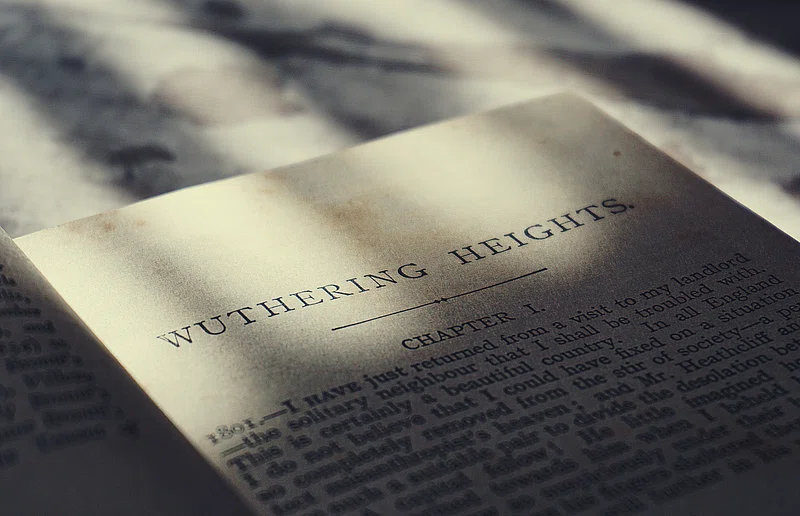
Director Emerald Fennell opens her adaptation of Emily Brontë’s Wuthering Heights not with a bang but with a whimper.
The dying cries of a man being hanged, to be exact. His face and body are veiled by a gray shroud, with only the cavern of his mouth visible as he gasps for air in a grotesque spectacle. When his sounds go quiet, they’re replaced with the raucous, ecstatic roar of the crowd — kissing, making propositions, screaming and cheering in a frenzy of desire and delirium, the obscenity of the scene only highlighted as the camera presses in close on the man’s visible erection from his suffering.
Did that make you uncomfortable? Good. It should have.
It’s the first of the director’s blunt, often unwieldy attempts of equating sex and lust not only with death but with violence. Fennell has a long history of using sensationalist perversions (see: That Toilet Scene in “Saltburn”) in ways that seem like, to be fair, an attempt to follow through on the idea that art should disturb the comfortable — but ultimately end up existing only to evoke a sick sense of revulsion, fascination or some mélange of both in the viewer, rather than carrying any real meaning or substance.
But Fennell’s problem here speaks to something greater: how numb we’ve become to the idea that sex and violence have become increasingly associated with each other. Think of BookTok’s obsession with the dark romance genre, where murder, stalking, extreme possessiveness and even the thinning of the boundaries of consent are romanticized, idealized and exoticized — or the growing rates of pornography addiction and the widespread access to increasingly provocative material provided through the Internet.
I’m not here to be a prude or to shame exploration. But what was once fringe culture isolated to small and tight-knit communities has now been disseminated more widely in ways that strip it of the nuance that’s necessary for safe practice, and water down the intimacy and trust that makes it fulfilling in the first place. Instead, this phenomenon ends up transforming abuse into something sexy, something forbidden and tantalizing. It dulls the knife.
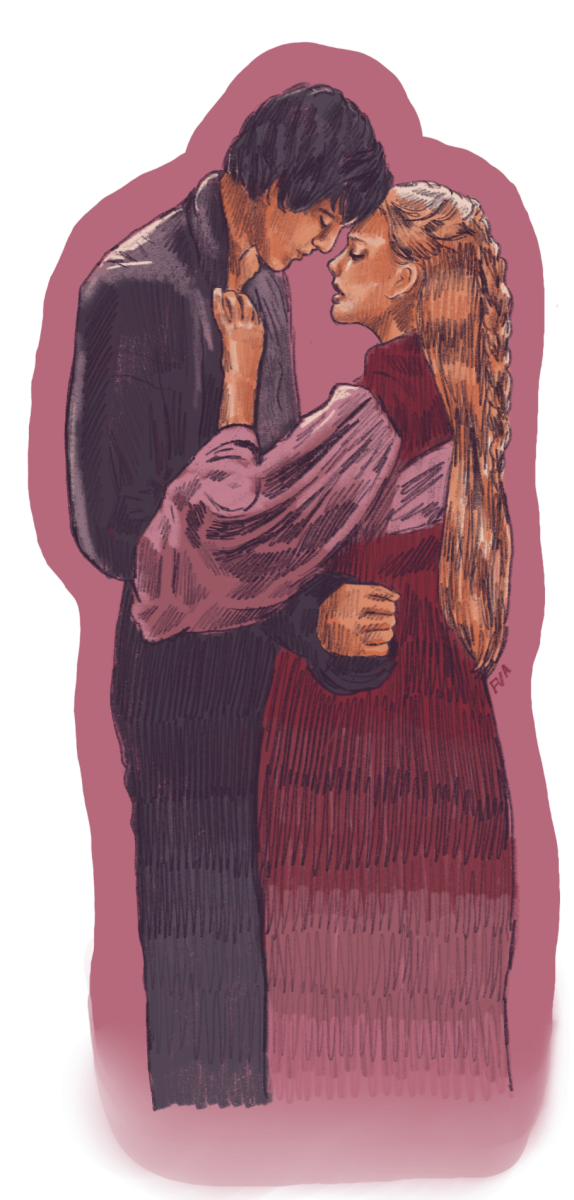
There’s no better example I can find of this than the treatment of Isabella Linton in Fennell’s “Wuthering Heights.” In the original novel, Isabella is a neighbor of main characters and mutually obsessed Catherine Earnshaw and Healthcliff, who becomes a victim of their vindictive and selfish machinations when Heathcliff elopes with her to spite Catherine. In the process, she enters an intensely abusive marriage with Heathcliff. He beats her, belittles her, hangs her beloved cocker spaniel. Yet, in the end, Isabella is a victim who is given the autonomy to eventually leave him.
Through Fennell’s disfiguring lens, Isabella becomes a willing participant in a kink relationship: degraded, humiliated, chained and crawling like the dog that Heathcliff hangs in the novel. When Nelly, perhaps the only sane character in the film, brings her back to the safety of the Linton home, she goes begging and screaming, pleading to stay with Heathcliff. The horror of her abuse is wholly lost and the power of her story as an abuse survivor dissolves into a voiceless attention grab.
The fetishization of Isabella’s abuse, and that of others, is ultimately a butchering of what intimacy should be: an exercise of trust, mutual consent and human connection. The intrusion of violence into the space of intimacy circles back to the historical cycles of rape and abuse that have shaped the female experience for centuries, if not millennia. And, equally importantly, the corruption goes both ways: when we sexualize objectively horrific displays of violence, we’re slowly killing one of the most human experiences we have — love.